What Are the Essential Features of a High-Converting E-Commerce Website?
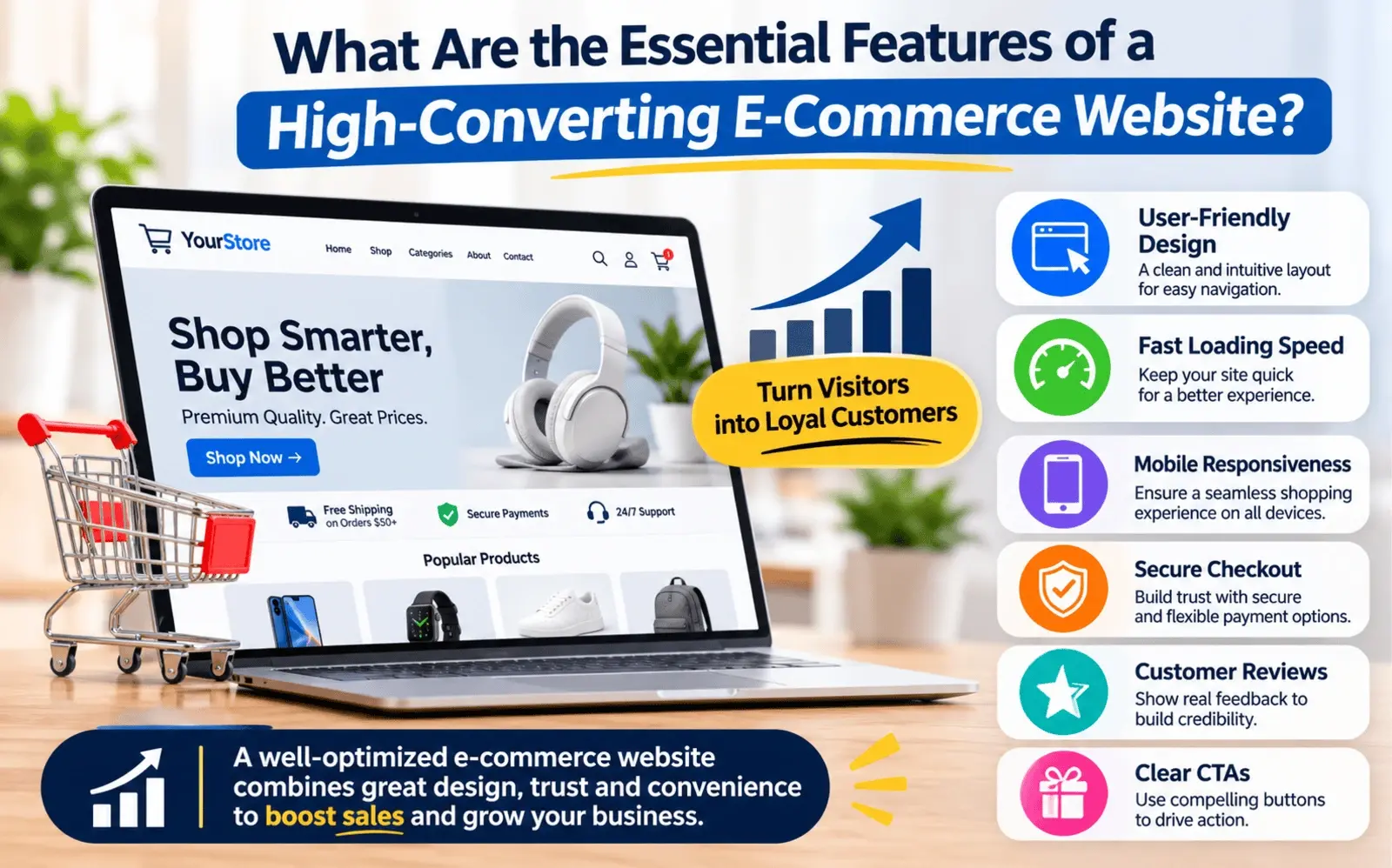
A high-converting e-commerce website combines mobile-responsive design, fast page load speeds, seamless multi-step navigation, secure checkout options, and strategic trust signals like customer reviews. By integrating high-quality product visuals, dynamic search filters, and optimized calls-to-action (CTAs), online stores eliminate user friction, encourage buying confidence, and turn casual traffic into repeatable revenue.
Building an online store is no longer just about listing products online; it is about engineering a smooth, frictionless purchasing journey. Many online store owners suffer from high bounce rates and abandoned shopping carts simply because their platform lacks core conversion elements.
Whether launching a new online enterprise or upgrading an existing portal, focusing on high-impact site functionality is critical. In this complete guide, you will learn the essential features that turn an ordinary store into a conversion machine, supported by expertise from Arkay Apps.
1. Lightning-Fast Page Load Speed and Optimized Performance
Page speed directly influences whether a visitor makes a purchase or leaves your platform immediately. Modern shoppers expect product pages to load within two seconds; any delay beyond that triggers a massive drop in conversion rates.
Slow loading times create cognitive friction, frustrating visitors and damaging your brand's credibility.
Key Speed Optimization Strategies
- Image Compression: Utilize next-gen image formats like WebP to retain crisp visual detail without inflating page sizes.
- Efficient Code Execution: Minify JavaScript, CSS, and database queries to ensure rapid server responses.
- Browser Caching & CDNs: Deliver static content quickly across geographic locations using robust caching mechanisms.
Partnering with a specialized web application development company in India allows store owners to build lightweight, bespoke platforms optimized for lightning-fast delivery.
2. Flawless Mobile Responsiveness Across All Devices
Over 70% of global e-commerce traffic originates from mobile devices. If your store requires pinch-to-zoom or features misaligned checkout forms on smartphones, your store is losing substantial revenue.
Mobile optimization requires touch-friendly navigation, adaptive layouts, and thumb-accessible purchase buttons.
Desktop Navigation ⟶ Expanded
Multi-Column Grid
Mobile Viewport ⟶ Single-Column
Thumb-Friendly Flow
By working with experts skilled in custom layout design, businesses ensure their store adapts seamlessly across every screen size.
3. Intuitive Site Navigation and Dynamic Search Filters
Shoppers cannot purchase items they cannot find. Structured site navigation helps visitors locate products effortlessly within 2 to 3 clicks.
Core Navigation Elements
- Predictive Search Bar: Include auto-complete suggestions that display real-time product thumbnails as users type.
- Faceted Filtering: Allow buyers to refine results by size, price range, color, brand, and customer ratings.
- Clear Category Hierarchy: Group products logically using intuitive drop-down menus and clean breadcrumb trails.
For brands handling complex product lines, applying custom search logic and intuitive UI/UX design via Arkay Apps Portfolio Solutions significantly streamlines product discovery.
4. High-Quality Product Media and Detailed Descriptions
Because online buyers cannot physically feel or test products, your media files and copy must bridge the tactile gap.
| Media Element | Recommended Format | Conversion Impact |
|---|---|---|
| Product Images | 360-degree interactive viewer & high-res zoom | Builds product clarity and reduces return rates. |
| Product Videos | 10–15 second lifestyle or unboxing clips | Increases user session duration and engagement. |
| Specs & Sizing | Clear dimensions, materials, and size guides | Removes purchasing hesitation and buyer doubt. |
5. Frictionless One-Page Checkout and Multiple Payment Options
Complex, multi-page checkouts are the leading cause of shopping cart abandonment. Streamlining the final transaction phase is critical for preserving sales momentum.
Traditional Checkout: Cart ───▶ Shipping Form ───▶ Billing Form ───▶ Review ───▶ Pay (High Drop-off)
High-Converting Flow: Cart ───▶ One-Page Guest Checkout + Digital Wallet ───▶ Pay (High Conversion)
Essential Checkout Capabilities
- Guest Checkout Option: Do not force users to register an account before placing an initial order.
- Diverse Payment Gateways: Support credit cards, digital wallets (Apple Pay, Google Pay), UPI, and Buy Now Pay Later (BNPL) services.
- Clear Shipping Rates: Display delivery fees and estimated arrival dates upfront to prevent last-minute surprise fees.
6. Built-In SEO Architecture and High-Impact Digital Marketing Signals
A feature-rich store must also attract continuous organic traffic to generate sales. Integrating strategic search engine optimization (SEO) into your code structure builds long-term visibility.
Implementing foundational search optimization involves optimizing meta data, canonical structures, product schema markups, and fast backend performance. Engaging professional SEO digital marketing services helps position your e-commerce platform ahead of competitors in search results.
7. Strategic Trust Badges, Ratings, and Social Proof
Security and social proof validate your site's legitimacy, assuring buyers that their sensitive data and payment details remain protected.
Essential Trust Elements
- Verified Reviews & Ratings: Display real customer feedback and photo uploads on product pages.
- SSL Certificates & Badges: Showcase recognizable security icons (e.g., 256-bit SSL encryption, Norton/McAfee shields) during checkout.
- Transparent Store Policies: Provide easy-to-find links to hassle-free return rules and customer support channels.
Frequently Asked Questions
Why is mobile responsiveness so important for e-commerce conversion rates?
Mobile devices drive the majority of e-commerce traffic. A site that is not optimized for mobile leads to distorted layouts, broken buttons, and difficult checkout steps, causing users to abandon their purchase immediately.
What is the ideal page load speed for an e-commerce website?
An e-commerce website should ideally load in under two seconds. Research indicates that pages loading within two seconds achieve significantly higher conversion rates compared to sites taking four seconds or longer.
How does guest checkout improve online sales?
Guest checkout removes friction by allowing customers to complete transactions without creating a password or filling out lengthy profile fields. This speeds up purchasing and decreases shopping cart abandonment.
What digital marketing strategies help bring qualified traffic to an e-commerce store?
Combining search engine optimization (SEO), targeted pay-per-click (PPC) campaigns, social media marketing, and automated email flows ensures your e-commerce store attracts high-intent traffic ready to convert.
How do trust badges and customer reviews increase conversions?
Trust badges reassure users that their financial details are encrypted and safe, while authentic reviews act as social proof that validates product quality, reducing buyer hesitation before payment.
Key Steps to Elevate Your E-Commerce Store's Performance
Building a high-converting e-commerce portal requires balancing visual design, backend speed, intuitive navigation, and transaction security. By focusing on mobile optimization, one-page checkout flows, clear trust signals, and SEO best practices, you can maximize your store's return on investment.
To create a tailored, scalable, and conversion-focused web application designed to accelerate business growth, partner with the expert team at Arkay Apps today.